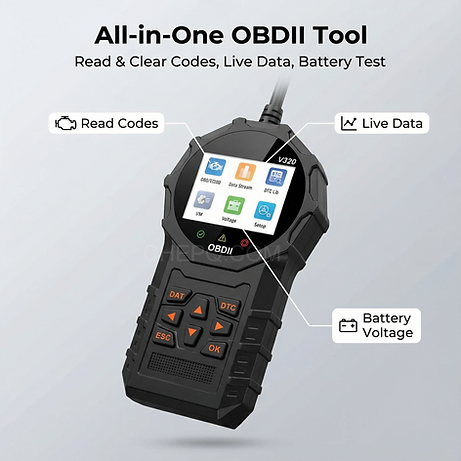
The reference of OBD2 interface and Tire Pressure Monitoring Systems present considerable frequency differences when reviewing implementations across European regions, Asian markets, and the US. In the American region, TPMS generally performs on 315 megahertz frequency, but European devices habitually use 433 MHz. Asian areas, particularly Chinese territory and the Japanese archipelago, feature a wider breadth of frequencies, including both 315 megacycles per second and 433 MHz band, intermittently with regional alterations. This complexity required specialized diagnostic devices and a exhaustive insight of local regulations to justly troubleshoot and repair issues.
EV Electric Power Vehicle Electric Drive Vehicle Scanners: Elucidating Grasping Exploring OBD2 and TPMS Data
As electric vehicles become increasingly prevalent, the required specialized scanners grows. specialized tools often include the functionality to read and translate both automobile onboard diagnostics and pressure sensing systems. Comprehending this data empowers service experts to determine faults with the EV's power train and ensure optimal tire pressure for heightened reliability and transport efficiency. Accordingly, an electric car scanner is a necessary tool for the modern electrified vehicle service center.
TPMS Sensor Frequencies: A Global Guide (Europe, North America, Asia)
Understanding auto tire load apparatus (TPMS) transmitter frequencies is paramount for exact diagnostics and substitute. Globally, different locales employ different frequency allocations. In North America zone, you'll typically encounter 315 MHz band and megahertz 433 waves. Europe utilizes a singular 433 point ninety-two MHz waveband primarily, although some former systems might transmit on different frequencies. Across Asia, the landscape is distinctly heterogeneous, with a mix of 315 MHz frequency, megahertz 433, and sometimes even 300 to ev service scanner 350 MHz range being deployed.
- North America: megahertz 315 & 433 MHz
- Europe: 433.92 MHz band (primarily)
- Asia: three hundred fifteen MHz, MHz 433, 300-350 MHz|mixed)
Understanding On-Board Diagnostics II : Learning TPMS Band Alterations Worldwide
The typical automobile diagnostic system serves a pivotal task in tracking automobile output, and increasingly contains tire pressure sensing data. However, TPMS transmissions alternate significantly in the worldwide . Especially, North America uses MHz 315 frequency, while EU states generally performs on a 433 megahertz frequency. Additional territories, specific examples being Australasia and the Asian continent, could employ extra transmissions or integrations thereof, pressing targeted scanning equipment for correct examination. Accordingly, mechanics and auto enthusiasts need to know these local contrasts to efficiently fix pressure tracking concerns.
Eurozone vs. America Tire Management Systems: Wavelength Spectrums Described for Automotive Professionals
Understanding the varying method to Tire Pressure Monitoring Systems across Europe and the United States is paramount for accurate evaluation. European Union TPMS predominantly executes on 433.92 MHz signal, a unique channel governed by local legislation. Contrarily, the United States of America system applies a dual set of bands: 315 MHz and megahertz three ninety. This contrast requires experts to have multi-band assessment tools to effectively detect the vehicle's TPMS device and stop false readings. In consequence, expertise with these signal alterations is vital for reliable TPMS handling.
Asia and Pacific Pressure Monitoring Controlling Receiver Signals and Car Diagnostics Connectivity
The APAC market for Pressure Control presents distinctive challenges related to receiver channels. Differing area-specific standards often dictate which wavelength may be used, leading to feasible conflict issues across mobile units. Furthermore, maintaining consistent Vehicle Diagnostics coordination is vital for valid data communication and assessment capabilities, necessitating careful review during system engineering and utilization. Suppliers ought to prioritize strategies that overcome these intricacies to support mass use throughout the domain.
Electric Vehicle Diagnostics: Excelling in Engine Diagnostics and Tire Pressure Monitoring Systems in Electric Mobility Vehicles
Diagnosing up-to-date electric vehicles presents distinct challenges, requiring certain solid command of as well as conventional and EV-oriented diagnostic equipment. While the familiar OBD2 connector remains one crucial doorway for collecting fault codes, its interpretation could differ appreciably from gas-powered combustion engine autos. Furthermore, battery-driven landscape incorporates innovative diagnostic considerations related to the management platform, motor units, and electrical charge infrastructure. Tire Pressure Monitoring Mechanisms, similarly, pose separate diagnostic opportunities given EV's influence on wheel abrasion and power effectiveness. Therefore, geting mastery in electric car maintenance is required for support operators to preserve top machine capability and welfare.
On-Board Scan Tools: Determining TPMS Sensor Frequencies (US Territory, European Area, East Asia)
Modern OBD-II systems frequently present the capability to pinpoint the exact frequencies radiated by tire safety systems transponders. This attribute is notably useful for corrective impaired TPMS apparatuses. Considering the area – US territory typically uses 315 MHz signal or 433.92 MHz band, European Union usually employs four hundred thirty-three point ninety-two MHz, and East Asian territories could utilize various signals including 315 MHz signal, 433.92 MHz signal, and even other quantities – the instrument will indicate this necessary fact to the installer. Subsequently, trustworthy TPMS assessment is enhanced with fitting OBD2 scanning equipment.
TPMS Troubleshooting: Frequency Challenges in Electric Vehicles Across Regions
Troubleshooting Tire Pressure Monitoring Systems throughout Electric Vehicles introduces a special set of complications, particularly associated with radio frequency disturbance. The transition to EVs, with their increasing use of electrical units, has generated a multi-layered landscape where TPMS signals can be frequently affected. Regional alterations in frequency bands exacerbate these troubles. For illustration, Europe uses 433.92 MHz frequency, while North America employs megahertz 315 – insisting on careful evaluation when investigating TPMS failures and verifying proper signal reception. Furthermore, the increase of wireless charging systems among EVs themselves is allowed to add another layer of difficulty to TPMS examination. Addressing these frequency disruptions skillfully is critical for keeping optimal EV capability.
- Consider regional frequency requirements.
- Scrutinize potential sources of radio noise obstruction.
- Deploy diagnostic systems capable of reading TPMS frequencies.
- Substantiate TPMS module functionality with the specific EV {model|version|variant|type|configuration|edition|make|