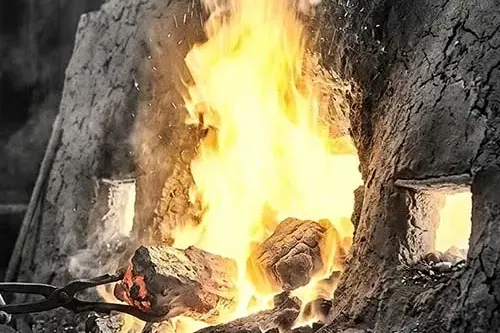
Every traditional ancient blade remains a remarkable work of art, but consider if you want to convey your personal design? Modifying your instrument is a meaningful journey, allowing you to fashion a truly distinctive piece. From the haft wrapping and habaki to the shield design and hamon, each part offers a chance for individual flair. This inquiry delves into the realm of katana enhancements, providing perspectives for both apprentices and accomplished enthusiasts looking for to set their endorsement on the historic art of the samurai.
Freshman's True Artistry
For starters eager to embark on the fulfilling journey of Japanese swordsmanship , 1060 steel katanas provide an prime entry point. This specialized grade of structural steel achieves a fine equilibrium between affordability and functionality . While inferior to hard as leading steels, 1060 allows for a manageable level of blade refinement , making it tailored to trainees to improve the basics of weapon preservation and value the refinement of expertly made Japanese weaponry. It’s a outstanding choice for building experience without the budgetary burden of more specialized steels.
T-10 Steel Edges : Striking Efficiency and Budget
To help hobbyists seeking an authentic blade experience without shattering the wallet , T10 metal katanas represent a attractive option. These blades offer a noticeable improvement in toughness compared to lower-grade alternatives, exhibiting decent edge retention and fair flexibility for rudimentary slashing techniques. While not rivaling the eminent characteristics of advanced steels like T100 or folded material , T10 provides a worthwhile blend of performance and affordability , making them a popular choice for trainees and those on a controlled revenue .
Surpassing the Edge : Customizing Your Weapon's Accessories and Hilt
Even though the polished metallic edge is undeniably the core point of a katana, truly enhancing its beauty lies in the detailed customization of its accessories and handle . This operation allows craftsmen to reveal their unique approach . Reflect on the vast possibilities: menuki - decorative embellishments that add visual charm ; the hamon shields – often artistically sculpted ; the tsuka heart itself, wrapped in conventional ito lace ; and the fusa cap, which can be fashioned from various materials like ingots or bone .
- Adopt styles that match with you.
- Test with distinctive elements .
- Prioritize superiority for a lasting influence .
The Love of the Katana: Antiquity, Formation, and Composition
The oriental cutlery shows a distinctive allure, steeped in eras of Japanese history and legacy . More than merely a contraption of battle , it's a icon of the champion ethos – a fusion of artistry and regulation . Its maturation spanned several generations, with early edges evolving into the sophisticated curvature and effective edge we know today. The workmanship involved is truly impressive , requiring years of study to conquer . The process involves a sophisticated folding of metal bloom, creating layers that improve the weapon’s flexibility and shaving ability. Different schools of metalworking started , each with their distinctive secrets and practices for achieving the ideal equilibrium and edge - a truly strenuous pursuit.
- Primary Katana varieties
- The responsibility of the traditional blade in samurai culture
- Ancient metalworking techniques
Choosing the Perfect Steel for Your Sword Project Project: 1060 vs. T10
Picking the appropriate steel is decisively important for any weapon project, and the judgment between 1060 and T10 can be tough. 1060 is a regular American fabrication, offering a respectable balance of robustness and fortitude, causing it moderately easy to handle. However, T10, a Nipponese sword custom steel, commonly boasts enhanced wear longevity and can possibly achieve a higher final hardness, although it can be relatively tough to treat and requires thorough heat annealing. Consider your proficiency and projected outcomes: for a trainee, 1060 may be a safer platform, while the seasoned smith might seek the extra merits of T10.
- User-friendliness of Applying
- Friction
- Peak Hardness
Unleashing the Power: High-Level Katana Modification Methods
Perfecting the skill of sword modification extends far beyond basic whetting. Serious masters are now delving into advanced techniques to truly expose a blade's hidden potential. This features intricate work with the temper line, utilizing specialized compositions for differential strengthening and carefully choosing the outline of the protector to optimize balance and performance. Beyond purely functional customizations, artisans are increasingly focused on producing unparalleled aesthetic splendor, through complex incising and layered finishes that truly transform a katana into a fine art.
Building a 1060 Sword from Basic Metal to Beauty
The journey commences with plain 1060 iron , a robust material far distant the fine katana it will change . Talented bladesmiths apply a detailed process of combining and fabricating the base steel, repeatedly annealing it and pounding it to clear impurities and fashion a steady grain structure. This arduous process, often extending for intervals , builds the necessary power and adaptability characteristic of a genuine Japanese armament . Follow-up heat processes , including meticulous hardening and resting, are imperative to achieve the preferred equipoise of sharpness, longevity and charm .- Overlaying: Reduces impurities and forms grain structure.
- Hammering: Creates the steel into the initial blade form.
- Heat Treatment: Defines the final hardness and flexibility.
The Enduring Appeal of the Katana: A Deep Dive into Steel and Customization
An historic katana continues a intense symbol denoting Japanese heritage , its fascination far exceeding mere armaments . Forged from rare steel and habitually featuring intricate trims, the process of creation itself is a revered art. Beyond the core craftsmanship, the ability to modify a katana - from the temper curve to the haft wrapping and clasp - affords for a sincerely individual communication for both worshippers and followers alike. This amalgamation of classical steelwork and boundless personalization creates the katana's continued widespread acceptance across the universe.
