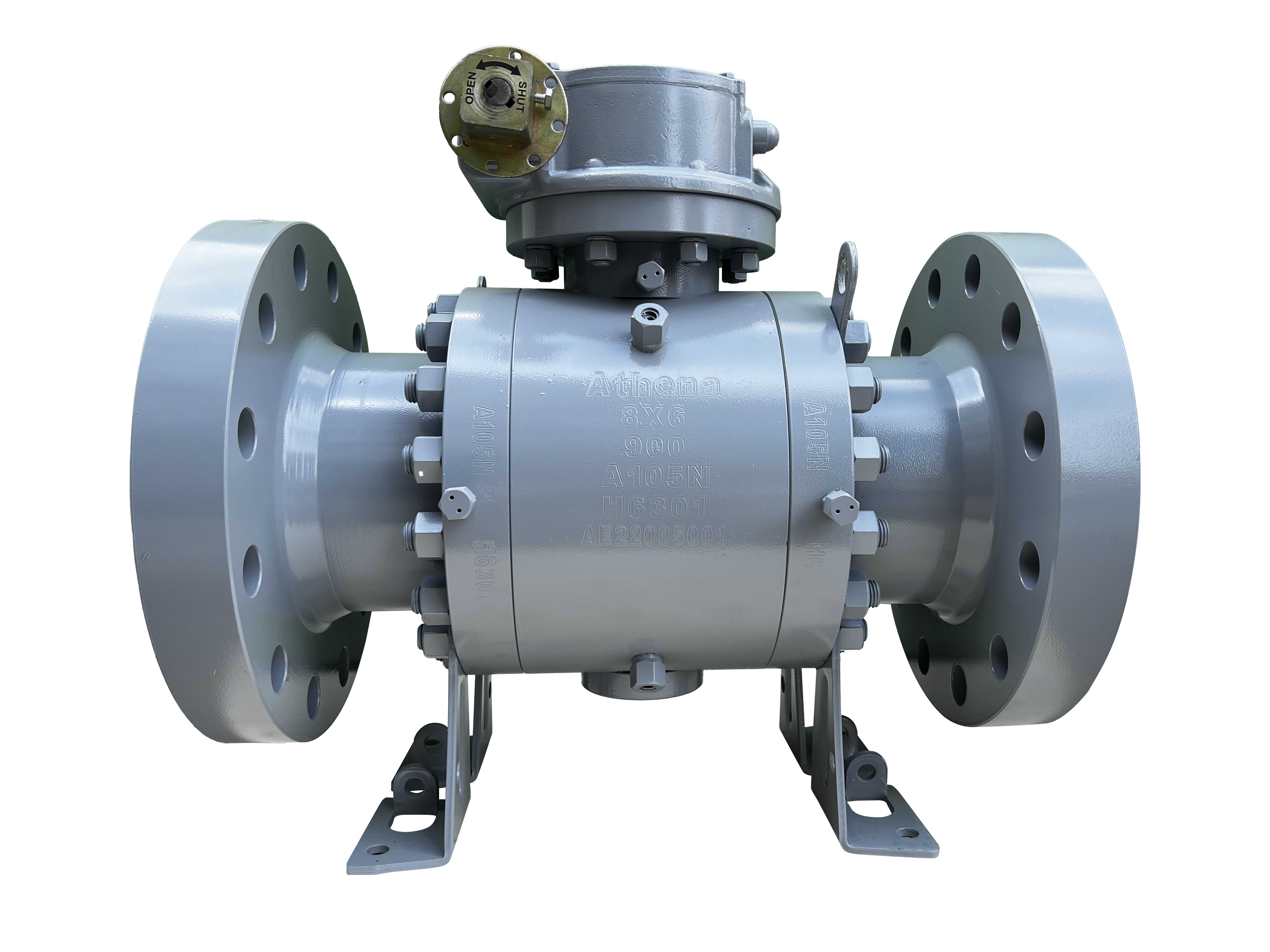
Exploring Gate Valves: Varieties, Functions, and Servicing
Stopper Valves, that rudimentary apparatus for isolating flux in channels, supply a clear method for initiating or cutting fluid path. Frequent variations include skewed gate, circular gate, and blade gate, each suited for specific jobs, such as crude processing, solution cleansing, and process premises. Recurrent care, including systematic assessments, oiling of mechanical pieces, and occasional renewal of old buffers, is crucial for ensuring stable performance and amplifying the apparatus's validity}.Opting for A Conduit Management
Once implementing that liquid distribution, choosing a suitable valve variant is significant for effective activity. Control valves and gate valves are usually selected, but fulfill significantly dissimilar functions. Shutter valves are primarily designed for entirely sealing the flow and are rarely suitably tailored for regulating flux levels. Conversely, globe valves afford superior abilities for precise movement governance and are frequently favored where oscillating flow rates are necessary. Reflect on the specific application's unique necessities before determining such final decision.
- Cutoff valves - Perfect for activate-deactivate administration.
- Globe valves - Excellent for adjusting process.
Anti-reverse Valve Functionality: Forbidding Backwash in Duct Configurations
Check valves are critical elements in many commercial plumbing lines, designed to maintain one-way passage of materials. Their chief purpose is to block reflux, where could harm machinery, pollute supplies, or disrupt workflows. They regularly execute self-drivenly, letting transit in one course while positively stopping movement in the opposite line.
Ball Valves: Strengths and Negatives for Production Operation
Spherical valves are frequently employed in enterprise settings due to their rudimentary design and steady operation. Yet, it’s important to assess both their helpful aspects and potential adverse characteristics. Regarding the benefits, ball valves offer quick shut-off capabilities, notable flow control when applied in a semi- position (though traditionally not recommended for prolonged throttling), and are fairly economical compared to certain valve classes.
- Uncomplicated Servicing
- Minor Stress Restriction
- Watertight Capping
Comparing Valve Varieties: Gate, Globe, Check, and Ball
Appreciating the contrasts with respect to valve categories is paramount for determining the apt approach for a named system. Let’s succinctly consider four widespread valves: gate, globe, check, and ball. Gate controls yield minimal obstruction to circulation when unconditionally unobstructed, making them most suitable for high rate assignments, but presenting poor management capabilities. Globe valves, in differentiation, showcase a disc that contacts against a gap, allowing for precise circulation balancing, although at the expense of amplified force lessening. Check mechanisms are constructed to instinctively avoid return flow, performing as a mono-directional preventative aspect. Finally, ball instruments adopt a spherical globe with a passage to provide flow, providing fast unsealing and stopping with partially low pressure reduction.
- Gate Valves: least blockage
- Globe Valves: exact throttling
- Check Valves: inhibit opposite flux
- Ball Valves: quick opening
Choosing the Appropriate Regulator: A Tutorial to Stopper, Rotary, Flow Control, and Orbital
In case of addressing with fluid flow, selecting the correct device is essential. Gate devices offer low obstruction and are suitable for direct application, but are not well-suited for regulating. Globe systems provide outstanding flux governance and are favorable for tasks requiring shifting transit rates. Check mechanisms are passive and allow flow in one track only, restricting backwash. Finally, ball mechanisms provide instant deactivation and are generally used in heavy-duty situations due to their robust configuration.
Addressing Common Malfunctions in Gate, Globe, and Ball Valves
Managing troublesome gate, globe, and ball instruments can be challenging, but most common issues are smoothly solved with a modest of understanding. Review some typical problems and expected solutions. For gate controls, look for discharge around the cover, which frequently indicates a degraded packing. Globe regulators are disposed to jamming due to sediment – apply scheduled manual motion or cleaning to wash away the hindrance. Ball systems would experience disk leaks if the sphere is broken; swapping the seat is commonly the preferred procedure.
- Review for erosion
- Confirm sufficient oiling
- Deliberate specialist guidance if the concern lives on
One Duty of Backflow Systems in Preserving Installation Security
Uni-directional valves act a crucial part in reinforcing complete operation wholeness across several areas. They inhibit backwash of liquids, which would produce significant menaces especially damage of stock, machines malfunction, and even employees hurt. For, in a fluid system, one-way valves secure the fountain from turning out compromised by return load. What's more, they permit protected ending protocols and minimize the chance for unregulated emission circumstances.
Contemplate the subsequent examples:
- Defense of delicate instruments from destruction due to reverse flow.
- Maintaining the soundness of fresh moisture inventories.
- Restraining unsafe product backwash into safe zones.
Examining Flow Control Device Classes: Gate, Globe, Ball, and Check
Though all serving as necessary components in vaporous movement, gate, globe, ball, industrial valves and check devices differ significantly in design and purpose. Stop valves offer limited flow obstruction when fully unblocked, ideal for disconnection but